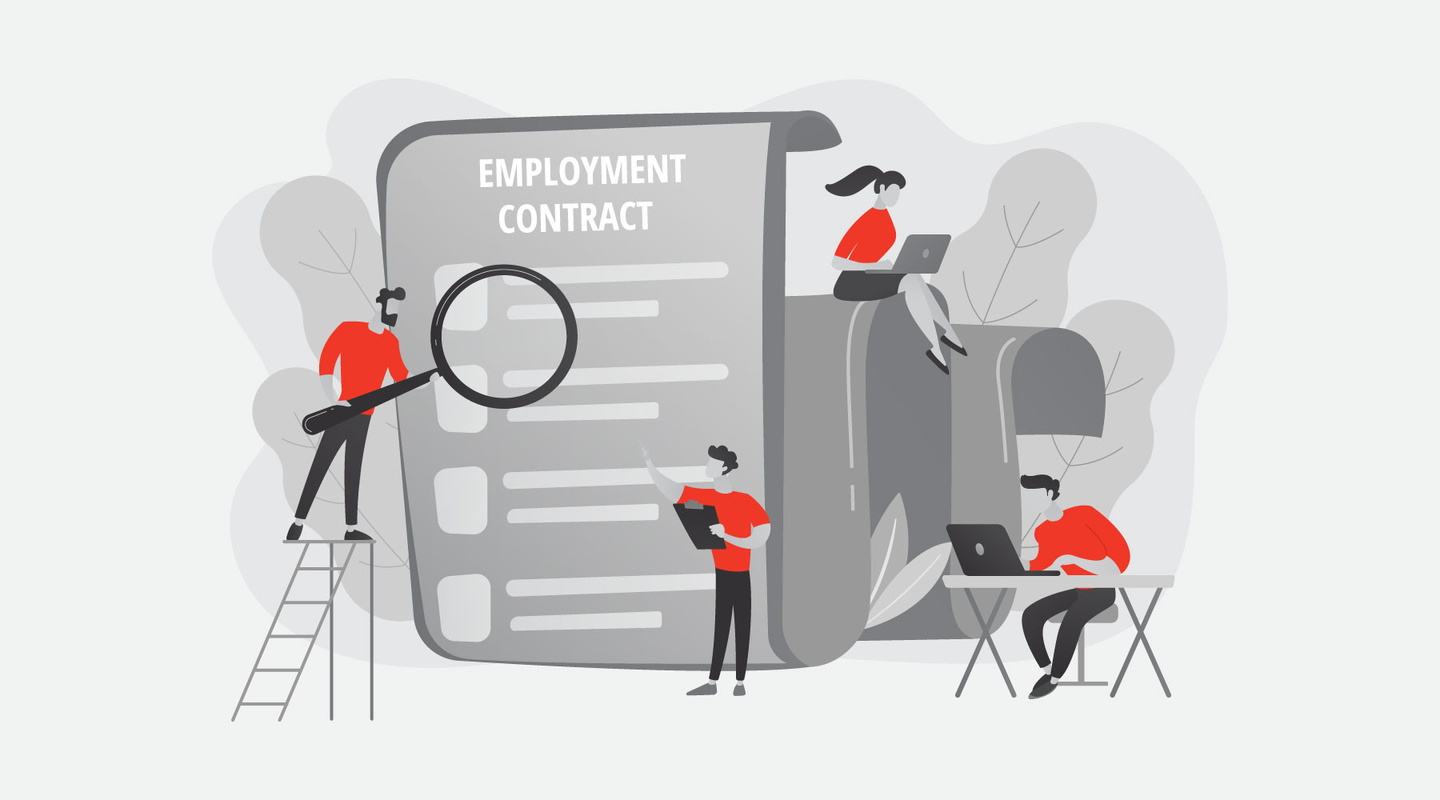
Any job involves a certain level of responsibility. However, the legislation provides for material liability, which is a kind of insurance aspect of the company. In what cases the employees are financially liable is in the following.
Legislation norms
The norms on the use of material liability can apply only to persons who are in the labor relations with the company. That is, in spite of the amount of work performed by the employee at the company, he/she must work under an employment contract.
According to Art. 130 of the Labor Code of Ukraine (hereinafter − LCU), which contains general grounds and conditions of material liability, employees are financially liable for damage caused to the company, institution, organization as a result of violation of their labor duties.
The right to bring an employee to a material liability arises in a company, in the case:
- violation of labor duties;
- existence of direct actual damage;
- causal connection between violation and harm;
- guilt or inactivity of the employee.
The absence of at least one of these facts makes it impossible to bring to material responsibility (the letter of the Ministry of Social Policy of 13.08.2014, No. 87/0/15-14/06).
Categories of direct actual damage
The Highest specialized court of Ukraine in its resolution of 11.12.2015, No. 12 (hereinafter − Regulation No. 12) also specified categories of direct actual damage.
Consequently, direct actual damage categories are the following:
- shortage, loss, destruction, damage or spoilage to material assets;
- damage caused by illicit sale of goods at a reduced price;
- costs caused by illegal or unjustified payments (overpayments);
- expenses caused by overpayments in favour of employees;
- amounts of a penalty, financial sanctions, fees paid in favour of counteragents under civil contracts, state or local budgets, state bodies;
- payments in favour of other entities in the order of damage compensation, as the organization is responsible for the damage caused by the actions of its employees;
- uncollectable receivables from the debtor, when the possibility of its collection is lost due to the expiry of the limitation period;
- uncollectable damage from the debtor (except for that part of the damage that belongs to the category of unearned profit), if the possibility of its collection is lost.
Responsibility of officials
Responsibility for not receiving of profit by the company, institution, organization can be imposed only on employees who are officials.
In order to define the term “an official” the Ministry of Justice of Ukraine prepared a letter dated 22.02.2013 No. 1332-0-26-13/11, which states that the main criterion for assigning a person to the cohort of officials is the presence of organizational or administrative and economic functions.
In its turn, according to the existing case law, which was developed and reflected in the relevant generalization of the Supreme Court of Ukraine (this is the decision of the Plenum of the Supreme Court of Ukraine “On judicial practice in cases of bribery” of April 26, 2002, No. 5), organizational and administrative duties are responsibilities for the implementation of management industry, labor collective, work area, production activities of individual workers in enterprises, institutions or organizations, regardless of ownership.
Such functions are performed, in particular, by heads of ministries, other central executive bodies, state, collective or private enterprises, institutions and organizations, their deputies, heads of structural units (foremen, heads of departments, laboratories, chairs), their deputies, persons who manage sections of work (masters, bosses, brigadiers, etc.).
At the same time, administrative and economic obligations are understood as responsibilities for the management or disposal of state, collective or private property (establishing the order of its storage, processing, implementation of control over these operations, etc.). Such authorities are in varying degrees in the heads of planning, supply, financial departments and services, warehouse managers, shops, workshops, studios, their deputies, heads of departments of enterprises, departmental inspectors and controllers, etc.
Borders of responsibility
An employee is financially liable only for the part of the damage directly arising from his actions or inaction (para.4 of the Regulation No. 12).
Financial liability is usually limited to a certain part of the employee’s earnings and should not exceed the full amount of the damage, except in cases stipulated by the law.